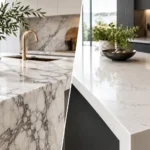
A saucepan lifted straight from the cooktop, a tray removed from the oven, a coffee machine working through a busy morning service – these are ordinary moments that ask a lot of a benchtop. So, is granite heat resistant? Generally, yes. Granite is one of the more heat-tolerant natural stones used in kitchens, but that does not mean it should be treated as an invulnerable hot plate.
For a material selected for its depth of colour, crystalline detail and enduring architectural presence, the right question is not simply whether granite can take heat. It is how heat exposure, slab selection, detailing and everyday habits work together over the life of the space.
Is granite heat resistant in everyday kitchens?
Granite is formed deep within the earth under intense heat and pressure. Its structure is made up largely of hard minerals such as quartz, feldspar and mica, which gives it the strength and density people associate with natural granite. In a well-designed kitchen, granite will comfortably manage the incidental heat of normal cooking better than many surface materials.
A warm serving dish, a hot mug or a pan set down briefly is unlikely to be a concern for sound granite. This makes it a practical choice for hardworking kitchen islands, sculleries, hospitality counters and outdoor entertaining areas where the material needs to feel as capable as it looks.
The distinction matters: heat resistant is not the same as heat proof. A pan taken directly from a very hot oven can transfer concentrated heat quickly into one small area. While the stone itself may cope well, sudden or repeated extremes introduce avoidable risk, particularly where the slab has a natural fissure, a delicate edge profile, a join or a cut-out nearby.
Why thermal shock is the real consideration
Natural stone expands and contracts slightly as its temperature changes. When one area of a slab heats or cools much faster than the surrounding stone, internal stress can develop. This is known as thermal shock.
Thermal shock is not an everyday event, and granite is generally more forgiving than softer, more porous decorative stones. Yet it is worth designing and living with the possibility in mind. A scorching pot on a cold benchtop, followed by a splash of cold water, is a more demanding situation than a warm dish resting briefly on the surface.
The practical approach is simple: use trivets, boards or heat pads for very hot cookware. It preserves the surface, protects the finish and becomes almost invisible as part of a well-run kitchen. In commercial or hospitality settings, where pans, appliances and serving ware move quickly, this small discipline is especially valuable.
Heat can affect more than the stone itself
A granite slab is not a single, uniform material in the way a manufactured sheet may be. Each slab has its own mineral composition, movement, grain direction and natural features. These characteristics are central to its appeal, but they also mean performance should be considered on a project-specific basis.
In some applications, the most vulnerable element may not be the body of the stone. Sealers, adhesives, joins and the surrounding cabinetry can all have different tolerances. Excessive heat may affect a surface treatment or leave a mark on a component adjoining the stone, even where the granite itself remains intact.
This is why material decisions should sit alongside the complete design. The location of cooktops, the shape of cut-outs, support beneath overhangs, the proximity of hot appliances and the intended use of the room all deserve attention before a slab is selected and detailed.
Granite, hot cookware and everyday care
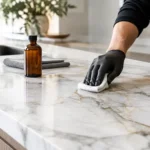
Granite rewards sensible care rather than anxious maintenance. A soft cloth, a pH-neutral stone cleaner where needed, and prompt attention to spills will help retain the finish and visual clarity of the surface. For heat, a few practical habits offer the best long-term protection.
Avoid placing cookware directly from the oven or cooktop onto the same spot repeatedly. Do not use the benchtop as a cooling rack for cast-iron cookware, roasting dishes or small appliances that generate prolonged heat underneath. And avoid sudden temperature changes, such as pouring cold water over an area that has just been intensely heated.
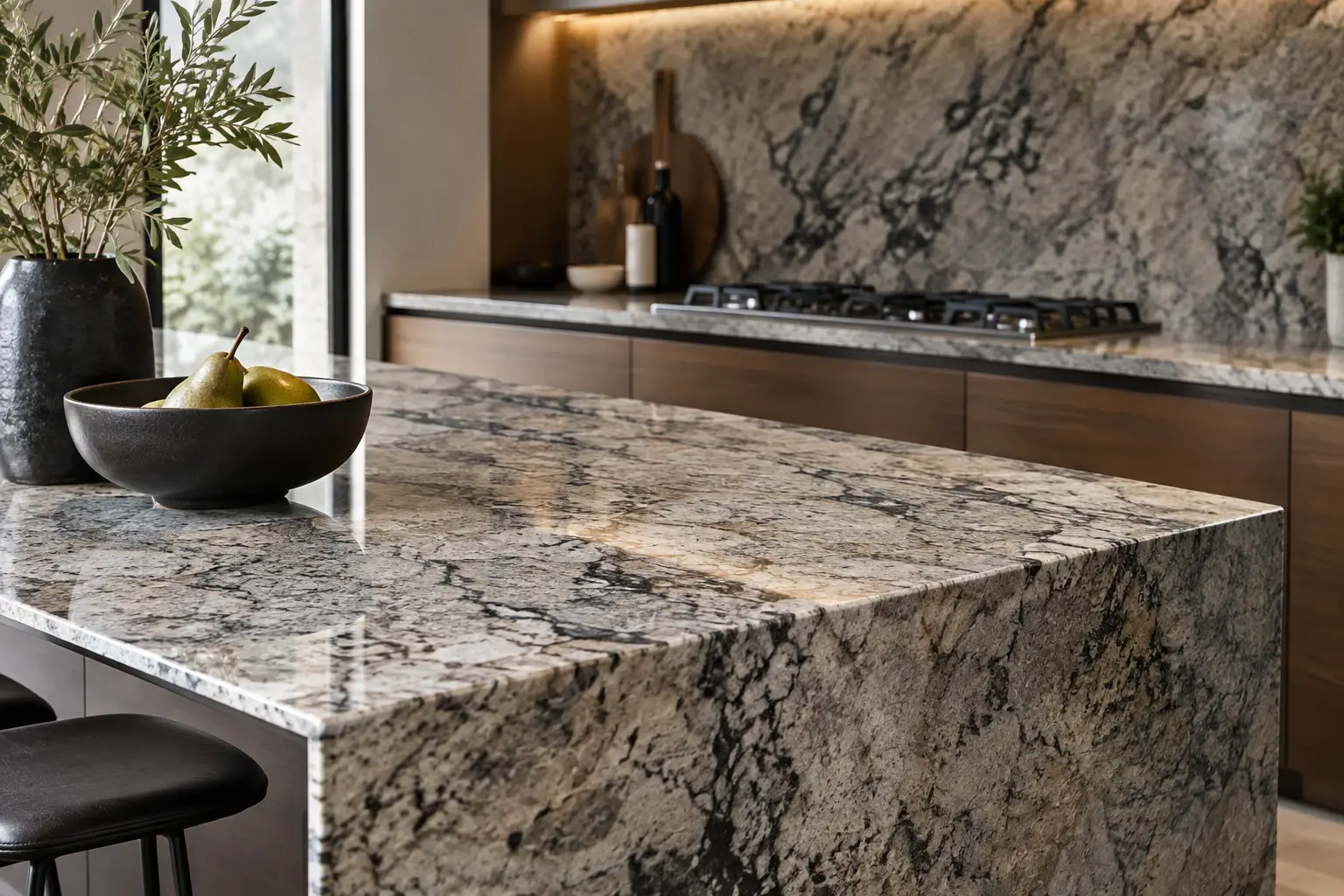
These measures are not a compromise on granite’s usability. They acknowledge that premium natural stone is both a hardworking surface and a distinctive material with its own geological character. A richly veined dark granite, a pale granular slab with quiet movement, and an exotic granite with dramatic mineral variation may each bring a different visual language to a project. They should be appreciated accordingly.
Can a hot pan stain granite?
Heat alone is not usually the cause of staining in granite. Stains are more often related to oils, pigments or other substances finding their way into areas of natural porosity or an inadequately maintained sealer. Granite varies considerably in density, so sealing requirements depend on the individual material rather than the category alone.
However, hot cookware can bake on food residue, leave metal transfer or affect topical products used near the surface. A trivet is therefore useful not only for managing heat, but also for keeping the benchtop clean and the finish looking considered.
If a mark does appear, resist aggressive household cleaners or abrasive pads. The right response depends on whether the issue is residue, a surface film, etching from another substance or genuine absorption into the stone. Careful assessment is preferable to a quick fix that dulls the finish.
Designing a heat-conscious granite kitchen
For designers and homeowners, the strongest outcomes come from considering granite early, not treating it as a final surface selection. A dramatic island may be the visual anchor of the room, while the areas closest to cooking require careful planning around function.
Where a cooktop sits within a granite benchtop, appropriate clearances and fabrication details are essential. Cut-outs create areas where stresses concentrate, and the support arrangement should reflect the slab thickness, layout and engineering of the overall joinery. The same thinking applies to downdraft systems, integrated drainage, appliance garages and generous overhangs.
The finish also influences how the surface is experienced. A polished granite can amplify depth, reflect light and reveal the mineral complexity within the slab. Honed or textured finishes can feel quieter and more tactile, particularly in architectural interiors seeking a softened, contemporary mood. Neither finish removes the need for sensible heat management, but each shapes how marks, fingerprints and daily wear are perceived.
Colour is another practical consideration. Darker granites may make pale residue or dust more visible, while lighter materials can show strongly coloured spills more readily. This is not a reason to avoid either direction. It is an invitation to select with the full life of the space in mind, not solely from a small sample.
Choosing granite for your space
The best granite is not defined by a generic performance label. It is the slab whose character, scale and practical qualities suit the project. Some granites are calm and architectural, with a fine, consistent grain. Others are expressive, with sweeping movement, vivid crystals or unexpected colour. The latter can transform an island, bar or reception surface into the defining material moment of a room.
Viewing full slabs is particularly valuable with granite. It allows you to understand how movement travels across the surface, where the most distinctive features sit and how the stone will relate to cabinetry, timber, metalwork and natural light. It also creates a more informed conversation about layout, cut-outs and the areas likely to receive the most heat and use.
At Moonstone, hand-selected natural stone is viewed as an integral part of the design rather than a commodity finish. For Auckland projects and those supplied throughout New Zealand, seeing the actual slab offers the clarity that images and small samples cannot provide.
Granite brings a rare balance of natural beauty and everyday capability. Use trivets for intense heat, detail the stone thoughtfully around appliances, and select a slab for the way it will live within the architecture. The result is a surface that can meet the rhythm of daily life while retaining the distinctive character that made it worth choosing.