A pale quartz island can look immaculate after years of daily breakfasts, red wine, school lunches and dinner preparation. That is the practical appeal behind the question: are quartz benchtops stain resistant? Generally, yes. Engineered quartz is highly resistant to everyday staining because its surface is dense and non-porous. But stain resistant does not mean immune to every mark, spill or cleaning product.
For a kitchen or bathroom designed to endure visually as well as functionally, it helps to understand where quartz performs brilliantly, where care is still required, and how colour and finish affect the way a surface lives in a space.
Are quartz benchtops stain resistant in everyday use?
Most premium engineered quartz surfaces are made from natural quartz aggregate bound with resin and pigments. This manufacturing process creates a tightly compacted surface with very low absorbency. Unlike many natural stones, quartz benchtops do not usually require sealing to help protect against staining.
That density makes a meaningful difference in day-to-day life. Coffee, tea, olive oil, juice, sauces and water are less likely to sink into the surface and leave a permanent trace when wiped away in a timely manner. In a busy family kitchen, hospitality fit-out or refined apartment interior, that ease of maintenance is a genuine advantage.
There is, however, a distinction worth making. A non-porous surface resists penetration. It can still show residue, discolouration, dull patches or marks caused by substances sitting on top of the surface, reacting with the resin, or being spread by abrasive cleaning. Performance also varies between product ranges, colours and manufacturers, so the care guidance for the chosen slab should always take precedence.
What can mark a quartz surface?
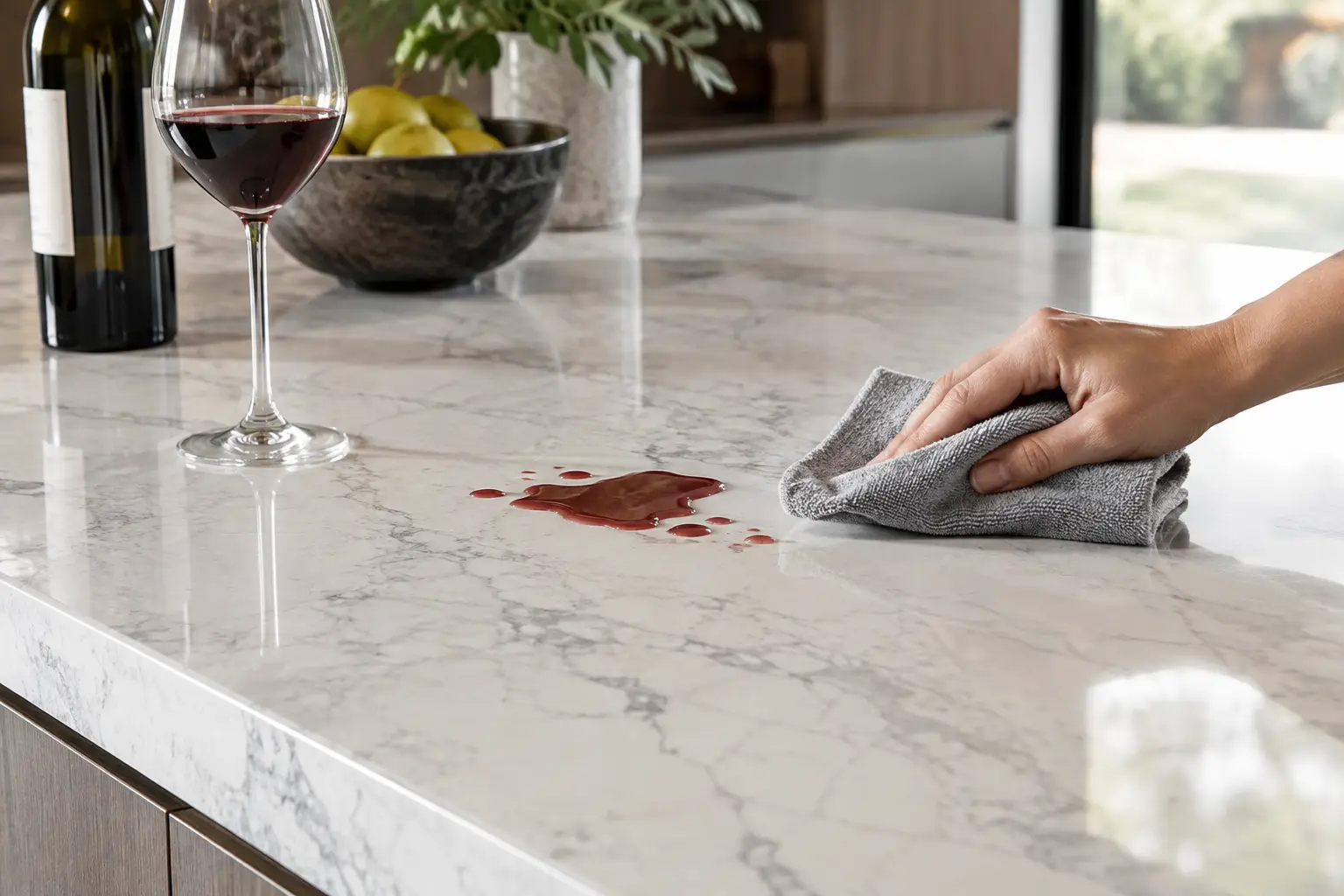
Quartz is forgiving, but it is not indifferent. The spills most likely to need prompt attention are intensely coloured, strongly acidic or chemically active materials. Turmeric, curry, red wine, beetroot, dark berries, concentrated food colouring and some cosmetics can leave visible residue if allowed to dry on a pale surface.
Permanent markers, ink, nail polish, paint and adhesive are another category altogether. These may not be absorbed into the quartz, yet can bond to or sit stubbornly on the resin-rich surface. They often require a product-specific cleaning approach rather than more force.
Heat deserves equal attention. A hot pan does not create a conventional stain, but excessive or sudden heat can alter the resin binder and leave a pale, dull or discoloured area that is difficult to reverse. Use trivets beneath hot cookware, slow cookers and heat-producing appliances. This is particularly relevant on an expansive island where the benchtop naturally becomes a serving and preparation surface.
Why some “stains” are not stains at all
A mark on quartz may be easier to resolve than it first appears. Many apparent stains are surface films: cooking oil, soap scum, mineral deposits, fingerprints or leftover cleaning product. On darker colours and polished finishes, these can look like cloudy patches. On white and light-toned designs, they may present as a faint grey or yellow cast.
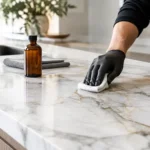
Start with a soft cloth, warm water and a small amount of mild, pH-neutral detergent. Wipe the surface again with clean water, then dry it with a soft cloth. Drying is not merely cosmetic. It prevents streaking and makes it easier to assess whether the mark has genuinely lifted.
Avoid treating a stubborn mark as an invitation to scrub harder. Scouring pads, harsh powders and highly alkaline or acidic cleaners can affect the surface sheen over time. The result may be a dull patch that appears more noticeable than the original spill.
A practical response to common spills
For ordinary food and drink spills, wipe them up as soon as practical and clean with mild detergent. For dried residue, allow warm soapy water to soften it first, then lift it gently with a non-abrasive cloth or plastic scraper used carefully at a low angle.
For ink, cosmetics, adhesive or paint, consult the care instructions supplied for the specific quartz surface before using any solvent or specialist cleaner. Test any approved product in an inconspicuous area first. A measured approach protects both the surface and its finish.
Colour, pattern and finish change what you notice
Stain resistance is only part of the selection conversation. The visual character of the quartz will influence which everyday marks are most visible.
A bright white benchtop with delicate grey veining can bring clarity and lightness to a kitchen, particularly when paired with timber, brushed metal or richly coloured joinery. It may, however, reveal highly pigmented food spills more readily than a mid-toned or more active design. That does not make it impractical. It simply rewards prompt wiping and thoughtful use.
Conversely, charcoal, black and deeply veined quartz can disguise food residue while making fingerprints, water spots and dust more apparent, especially in a polished finish. Honed or matte-look surfaces can offer a softer architectural appearance, but their cleaning requirements should be checked carefully. Each finish has its own relationship with light, touch and daily wear.
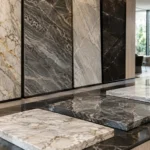
This is why viewing a full slab matters. A small sample can communicate colour, but it cannot fully reveal movement, veining scale, reflective quality or the way a surface will read across a long island. The right material is not only one that resists stains. It is one whose tone, pattern and finish suit the rhythm of the space.
Quartz versus natural stone: a considered choice
For clients choosing between engineered quartz and rare natural stone, stain resistance is often one of the first practical considerations. Quartz generally offers greater consistency and lower day-to-day maintenance because of its non-porous construction. It is well suited to projects where a controlled colour palette, clean pattern repeat and straightforward care are priorities.
Natural stones bring something different: geological depth, natural variation and exceptional movement that cannot be replicated. Marble, quartzite and granite each have distinct characteristics, including different levels of porosity, hardness and acid sensitivity. Some natural stones benefit from sealing and a more attentive care routine, particularly in heavily used kitchens.
Neither choice is automatically superior. A softly veined quartz may be exactly right for a calm, tailored contemporary kitchen. A dramatic quartzite or richly expressive marble may be the material that gives an island, vanity or feature wall its defining presence. The best decision balances visual intent, expected use and the level of patina the client is comfortable embracing.
Habits that protect the finish
Quartz does not ask for an elaborate maintenance regime. It responds best to simple, regular care: wipe spills rather than leaving them overnight, use a chopping board for food preparation, and place hot cookware on a trivet. Keep harsh oven cleaners, drain cleaners, paint removers and strong bleach products away from the benchtop unless the manufacturer specifically permits them.
Take care with cleaning products stored beneath the sink as well. A leaking bottle can sit against an edge or underside for an extended period, where it may cause discolouration or affect adhesives and cabinetry. Good housekeeping protects the entire kitchen, not just the visible surface.
If a mark remains after normal cleaning, pause before trying home remedies. The internet is full of enthusiastic advice involving abrasive powders, undiluted chemicals and improvised tools. A product-specific recommendation is the more considered path, especially for a premium surface selected to look enduring for years to come.
Selecting quartz for a kitchen that will be lived in
The most successful benchtops are selected with the whole room in mind. Consider where daylight falls, whether the island will double as a dining table, how often the kitchen will host, and whether the household prefers a pristine appearance or a surface with enough visual movement to be more forgiving between cleans.
For design professionals, it is also worth aligning the quartz selection with splashback material, tapware finish, joinery sheen and the scale of the room. A refined surface can act as a quiet foundation, or it can carry the composition with dramatic veining and contrast. Its stain resistance gives useful confidence, but its visual contribution is what makes it architectural.
At Moonstone, viewing selected quartz surfaces in person allows clients and specifiers to assess the material beyond a screen – its depth, finish and distinctive character in changing light. Choose a surface that supports the way the space will be used, then give it the modest care it deserves. That is how a quartz benchtop retains both its practicality and its presence.