Marble rewards attention. Its veining, depth and natural variation can make a kitchen island or vanity feel entirely individual, but it is also a calcium-based natural stone that responds to everyday life. Knowing how to seal marble benchtops properly helps protect that distinctive character from staining while preserving the finish selected for your space.
Sealing is a straightforward part of marble care, not a way to make the surface invincible. A suitable sealer slows the absorption of liquids, giving you more time to wipe up oil, wine, coffee or cooking spills. It will not prevent etching from acidic ingredients, remove existing marks or replace considerate daily use. That distinction is worth understanding before choosing any product.
What sealing marble benchtops actually does
Most marble benchtops benefit from an impregnating or penetrating sealer. This type of treatment moves into the stone’s microscopic pores rather than sitting as a visible film on top. It helps resist staining without significantly changing the natural feel, colour or movement of the marble.
A topical coating is generally not the right choice for a marble kitchen surface. Products that form a surface layer can alter the appearance, create an artificial sheen, wear unevenly and become difficult to repair gracefully. Marble is valued for its authenticity, and a penetrating sealer respects that material quality.
It is equally useful to understand what a sealer cannot do. Lemon juice, vinegar, tomatoes and other acidic foods can react with marble and leave a dull or lighter patch called an etch. This is a change to the stone surface, rather than a stain sitting within it. Sealer will not stop this chemical reaction, although prompt cleaning remains good practice.
Before you seal a marble benchtop
First establish whether the stone needs sealing now. Newly installed marble may already have been treated by the fabricator, and applying more product immediately is not always necessary. Ask what sealer was used, if any, and whether there is a recommended reapplication schedule for the particular marble and finish.
The water-drop test is a useful guide. Place a few drops of water in an unobtrusive area and leave them for around 10 to 15 minutes. If the marble darkens as it absorbs the water, then returns to its original appearance as it dries, the existing protection may be diminished. If the water remains beaded on the surface with no darkening, the benchtop is likely still well protected.
This is only an indicator. Some marbles are naturally more absorbent than others, and honed finishes can behave differently from polished surfaces. A rare, highly expressive slab may have varied density across its surface, so assess several areas rather than relying on one small spot.
The benchtop must be clean and completely dry before sealing. Wash it with a pH-neutral stone cleaner, then remove all cleaner residue with a clean damp cloth. Avoid household sprays, vinegar, bleach, abrasive cream cleansers and multipurpose products, as they can leave residues or damage the finish.
Allow sufficient drying time after cleaning. Moisture held within the stone can interfere with the sealer’s ability to penetrate evenly. If the benchtop has recently been installed, confirm that adhesives, grout and silicone around the surface have cured as advised before beginning.
Choose a sealer suited to natural marble
Select a high-quality penetrating sealer specifically labelled for marble or natural stone benchtops. For kitchen use, check that the manufacturer identifies the cured product as suitable for food-preparation areas where relevant. Read the label closely, particularly for application temperature, dwell time, ventilation and curing instructions.
A colour-enhancing sealer deserves extra care. It can deepen the tone of certain stones and create a richer, wet-look appearance. That may be desirable for some materials, but it is a design decision rather than a maintenance default. Test it on an offcut or a concealed area first, because the result can be permanent and may vary across natural stone.
You will generally need the sealer, clean white lint-free cloths or applicator pads, a pH-neutral stone cleaner, gloves and adequate ventilation. Keep a second set of dry cloths nearby. Removing excess sealer promptly is one of the most important parts of the process.
How to seal marble benchtops step by step
1. Work in small, manageable sections
Divide the benchtop visually into sections you can complete without rushing. This is particularly helpful on a large island, where sealer can begin drying before you have had time to buff it away. Avoid applying sealer in direct sunlight or onto a hot surface.
Pour a modest amount onto an applicator pad or cloth rather than directly flooding the benchtop. Spread it into an even, thin coat, covering the full surface and paying attention to edges, cut-outs and splashback returns where appropriate. The aim is even saturation, not excess product.
2. Let the sealer dwell, then keep it moving
Leave the product on the marble for the dwell time specified by its manufacturer. Some products need only a few minutes; others require longer. If dry spots appear while the sealer is still meant to be dwelling, apply a small additional amount to those areas so the surface remains evenly wet.
Do not assume a longer dwell time gives better protection. Once the stone has taken up what it can, excess sealer can dry on the surface and leave haze, streaks or tacky patches. Follow the product instructions rather than working to a fixed rule.
3. Remove every trace of excess
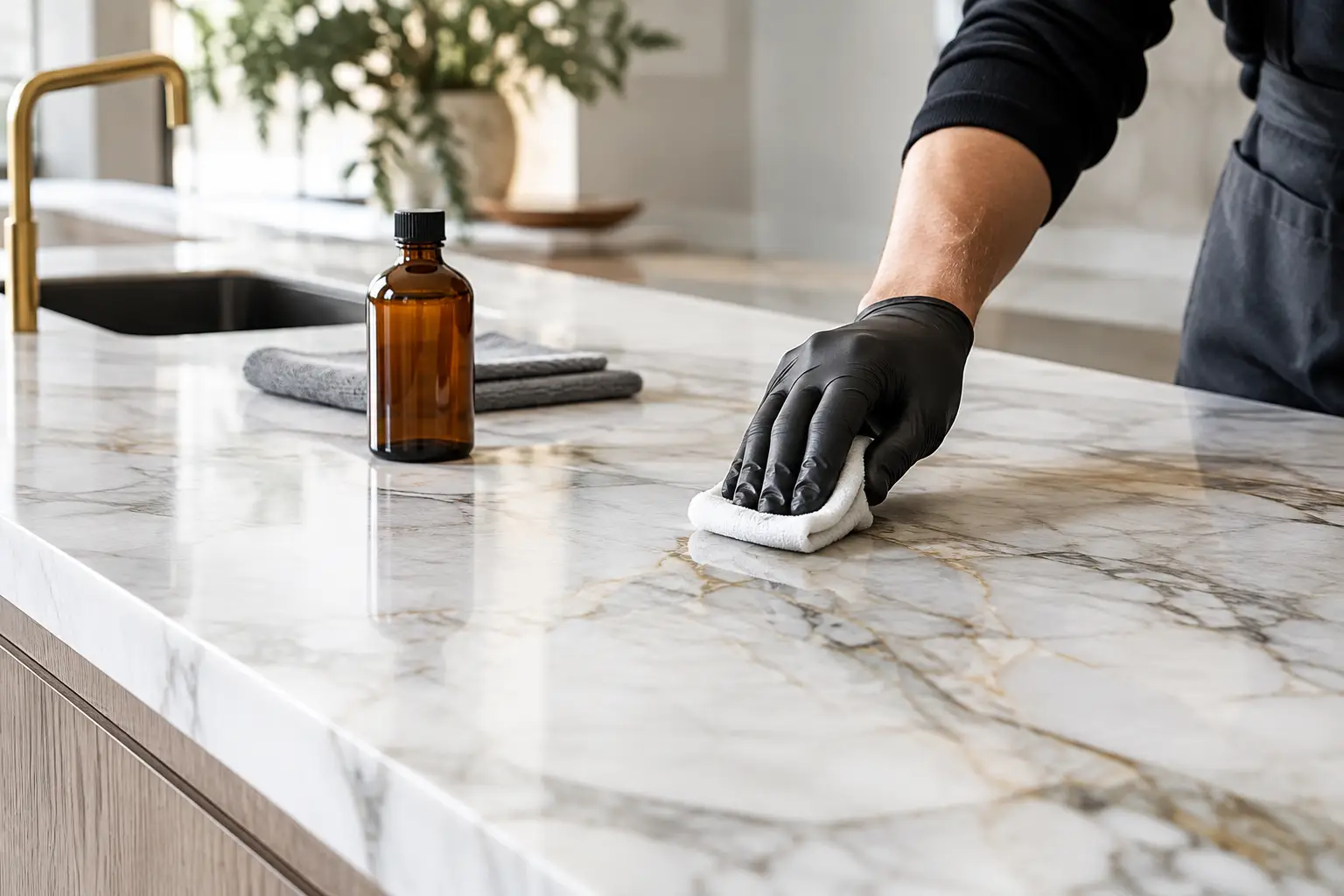
Before the sealer dries, buff the entire treated section thoroughly with a clean, dry lint-free cloth. Then inspect from different angles in good light. The marble should feel dry and natural, not slippery, sticky or visibly coated.
This final wipe is where many avoidable issues occur. If you see smears after the product has cured, they may need to be softened and removed according to the sealer manufacturer’s instructions. Prevention is far easier than correcting residue on a polished surface.
4. Apply a second coat only when needed
Some absorbent marbles may benefit from a second light coat. Others will not take additional sealer and may simply leave surplus on the surface. If the product allows a second coat, apply it within the stated recoat window and repeat the same careful buffing process.
More sealer is not automatically better. A well-applied single coat of the right product is preferable to multiple heavy applications that change the feel of the benchtop.
5. Respect the curing period
The surface may feel dry quickly, but the sealer can take longer to cure fully. Keep water, food preparation, oils and cleaners off the benchtop for the period stated on the label. This is especially relevant in a busy kitchen, where a little planning protects the finish of a carefully selected material.
Caring for sealed marble between applications
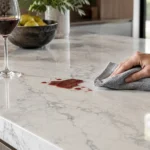
Daily care should be uncomplicated. Wipe spills promptly with a soft cloth, then clean with warm water or a pH-neutral stone cleaner when needed. Use coasters under glasses, boards for food preparation and trivets beneath hot cookware. These habits reduce the likelihood of both staining and etching without making the kitchen feel overly precious.
Avoid leaving oils, strongly coloured foods and acidic liquids on the surface. Honed marble can be particularly forgiving in appearance because it does not reflect light as sharply as a polished finish, yet it still benefits from the same considered care. The right finish depends on the desired architecture of the room and the way the space will be used.
Resealing is based on performance, not a rigid calendar. In a family kitchen or hospitality setting, check the water-drop test periodically. A lightly used vanity may hold its protection for considerably longer than a frequently used kitchen island. If water begins to absorb and darken the stone, clean, dry and reseal the area or the complete benchtop as appropriate.
When professional advice is worthwhile
If your marble has existing stains, etching, dull areas or visible sealer residue, pause before applying another product. These issues are not all solved in the same way. A stone-care specialist or experienced fabricator can help identify whether the concern is within the stone, on the surface, or related to a previous treatment.
For a new project, discuss care expectations while selecting the slab and finish. At Moonstone, viewing actual hand-selected marble makes it easier to appreciate the subtle variation, movement and surface character that will become part of daily life. That conversation can also help align a distinctive material with the practical rhythm of the space.
A sealed marble benchtop is not meant to look sealed. It should continue to look like marble: tactile, expressive and naturally individual, with protection working quietly beneath the surface.