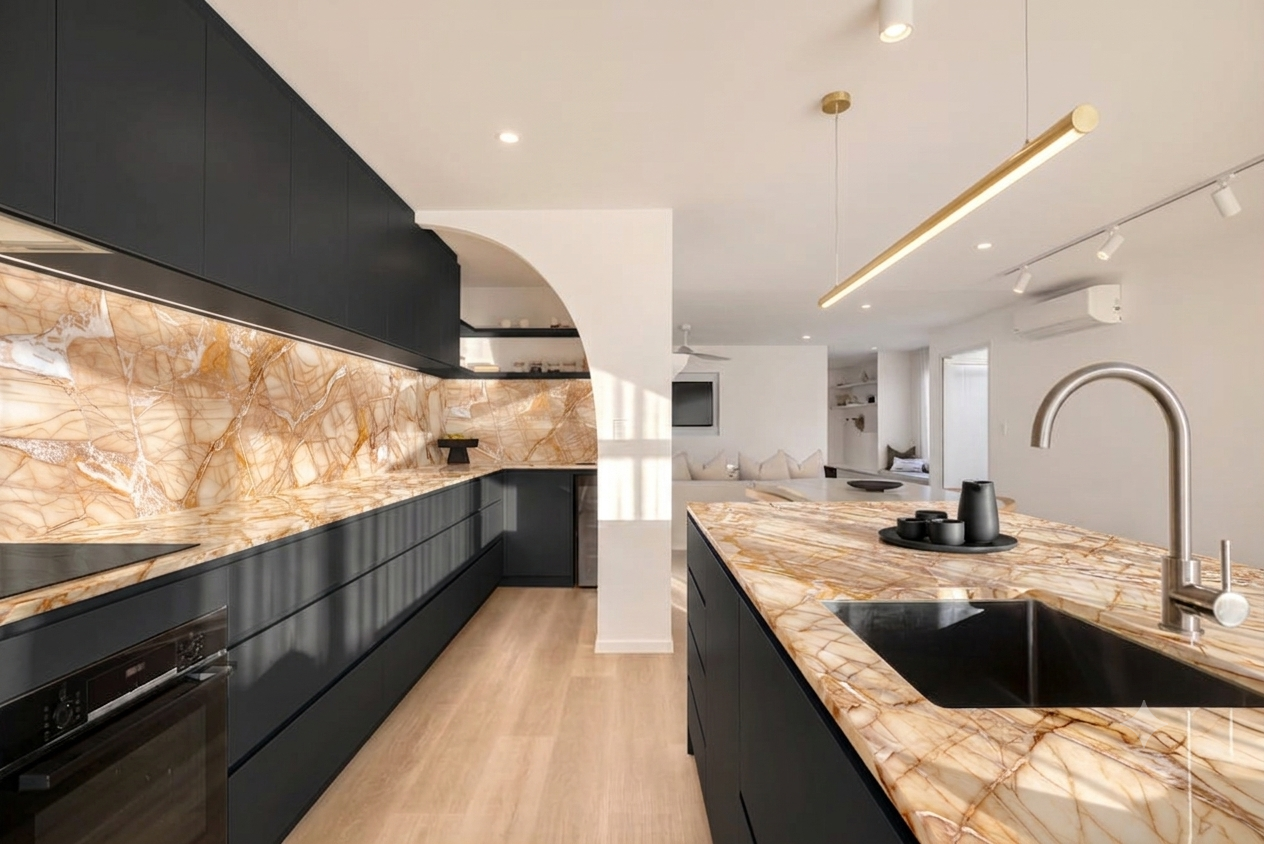
A slab of Calacatta with broad grey veining, a deep green marble cut through with mineral movement, or a warm, honeyed stone with quiet translucency can alter the entire reading of a room. Exotic marble slabs Auckland homeowners choose are not background finishes. They are architectural materials with presence, selected to give a kitchen, bathroom, fireplace or feature wall a singular point of view.
For projects where every material has been considered, marble offers something manufactured surfaces cannot replicate: natural variation formed over millennia. No two slabs share the same veining, colour depth or crystalline detail. That individuality is precisely the value. The right stone does more than complete a scheme – it gives the space its identity.
Why exotic marble slabs in Auckland make a difference
Auckland homes often bring together strong natural light, contemporary architecture and a close relationship with the landscape. Exotic marble sits comfortably within that setting. Its movement can soften sharp-lined joinery, add warmth to minimalist palettes and introduce depth where timber, metal and plaster alone may feel too controlled.
The word exotic matters because not all marble is selected for the same purpose. A commodity slab is chosen primarily for availability and consistency. An exotic slab is chosen for character: dramatic veining, rare colour, unusual mineral formation or a scale of movement that makes it feel unmistakably individual. It is stone with a visual signature.
This is especially relevant for a large kitchen island or a full-height bathroom wall. A small sample can suggest colour, but it cannot show how a vein travels across a three-metre benchtop, how the background shifts in changing light, or where a bookmatched pair will create symmetry. These decisions need to be made in front of the full slab.
The slab is the design, not simply a surface
When marble is hand-selected early enough, it can guide the rest of the interior. A white marble with soft gold veining may lead towards brushed brass, warm oak and muted limestone tones. A Nero-style stone with high contrast movement can support darker joinery and sculptural lighting. Green marble may connect an interior to planting, water views or a garden-facing living space without becoming literal.
This does not mean every room needs dramatic stone. In some projects, the finest choice is a quietly figured marble that reveals itself slowly. The question is not whether a slab is bold or restrained. It is whether its colour, movement and finish belong to the architecture around it.
Where marble creates its strongest impact
A benchtop is often the natural starting point, but exotic marble can be specified far beyond the kitchen. Its best application depends on the amount of visual space available, how the surface will be used and whether the project benefits from a focal point or a more continuous material language.
In kitchens, a waterfall island gives the stone room to show its full movement. Continuing the same slab up the splashback can make cabinetry feel more integrated, particularly where upper cupboards are limited. For a quieter effect, marble can sit on the island alone while a simpler splashback allows the stone to remain the hero.
Bathrooms invite a different approach. A vanity in richly veined marble can make a compact powder room memorable, while full-height wall cladding brings a sense of permanence to a principal ensuite. Bookmatching can be highly effective here, although it needs discipline. On an expansive wall, mirrored veining becomes a deliberate composition. In a smaller space, a single well-positioned slab may feel more natural.
Fireplace surrounds, bar fronts, reception counters and feature walls are also ideal settings. These areas generally receive less direct wear than a busy kitchen bench, allowing the visual qualities of marble to take priority. In commercial interiors, one exceptional stone application can establish a premium arrival experience without requiring expensive materials across every surface.
Scale, direction and fabrication matter
The beauty of marble is only fully realised through considered fabrication. Vein direction, cut-out placement, joins and edge details all affect the finished result. A fabricator can position a sink cut-out away from the most expressive section of the slab, align veining across a waterfall return or determine whether a mitred edge will give the desired visual weight.
Bookmatching deserves particular care. It creates a mirrored effect by opening two adjoining slabs like pages of a book. The result can be extraordinary on walls and fireplaces, where the vein pattern becomes almost artwork. It may be less suitable where a project calls for an organic, unforced feel. There is no universal right answer – only the approach that suits the stone and the setting.
Living with natural marble
Marble is a design-led investment, but it should be specified honestly. It is a natural calcite stone, which means it can etch when exposed to acidic substances such as lemon juice, vinegar or wine. It can also develop a gentle patina over time. For many owners, this is part of marble’s appeal: the surface becomes more personal through use rather than remaining visually fixed.
A quality sealer helps protect against staining, but it does not make marble indestructible. In a family kitchen that sees constant cooking, entertaining and school-bag traffic, a quieter marble with a honed finish can be more forgiving than a high-polish, pale stone with very open movement. In a formal bar, powder room or feature wall, maintenance considerations are usually lighter and a more expressive finish may be appropriate.
Honed marble has a soft, matte appearance that can disguise fine marks more readily than polished stone. Polished marble reflects light and emphasises depth of colour, making it particularly effective in bathrooms and lower-contact spaces. Both have their place. The choice should reflect how the surface will be lived with, not just how it will photograph on installation day.
For routine care, use a pH-neutral stone cleaner, wipe spills promptly and avoid abrasive pads or acidic household products. A little care preserves the surface, but it also pays to accept that natural stone is not intended to look factory-perfect forever. Its longevity comes from the material itself, not from an artificial promise of uniformity.
Selecting exotic marble slabs in Auckland
Choosing from photographs alone is rarely enough. Screen images flatten colour, conceal depth and often exaggerate or mute veining depending on lighting. Visiting a showroom allows homeowners, architects and designers to compare slabs side by side, view them vertically and understand their true scale.
Bring the practical parts of the project to that appointment: plans, cabinet colours, flooring samples, tapware finishes and an indication of where the stone will be used. It is also useful to know whether you are considering a honed or polished finish, and whether the stone needs to work across several areas. These details turn a beautiful initial response into a material decision that can be fabricated with confidence.
At Moonstone, the selection process centres on the world’s finest hand-selected marble, granite and exotic quartz surfaces. The value is not simply access to rare stone. It is the opportunity to assess each slab as an individual piece, with the scale, movement and project requirements clearly in view.
Marble or exotic quartz?
For clients drawn to strong pattern but concerned about the demands of a high-use surface, exotic quartz may be worth considering alongside natural marble. Premium quartz can offer striking design, consistent performance and greater resistance to everyday kitchen wear. It is particularly practical for households that want a dramatic island but prefer lower maintenance.
Yet marble and quartz are not interchangeable. Marble carries natural variation, tactile depth and the quiet irregularity of a geological material. Quartz offers a more controlled appearance and dependable consistency. The best decision depends on the project brief, the location of the surface and the owner’s relationship with patina. Many considered interiors use both: natural stone where authenticity and visual drama matter most, and engineered quartz where performance is the priority.
Give the stone time to speak
The most successful marble choices are rarely rushed. Stand back from the slab. Notice the areas that hold your eye, the colours that emerge beyond the first impression and the way the movement might travel through the finished space. Ask how it will meet the joinery, where the joins will fall and what the material will look like in morning sun as well as evening light.
Exotic marble deserves that level of attention. When the slab is chosen with care and fabricated with respect for its natural character, it becomes more than a finish. It becomes the detail people remember long after the project is complete. LET’S TALK STONE.