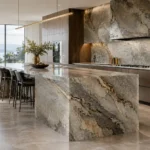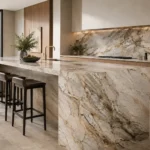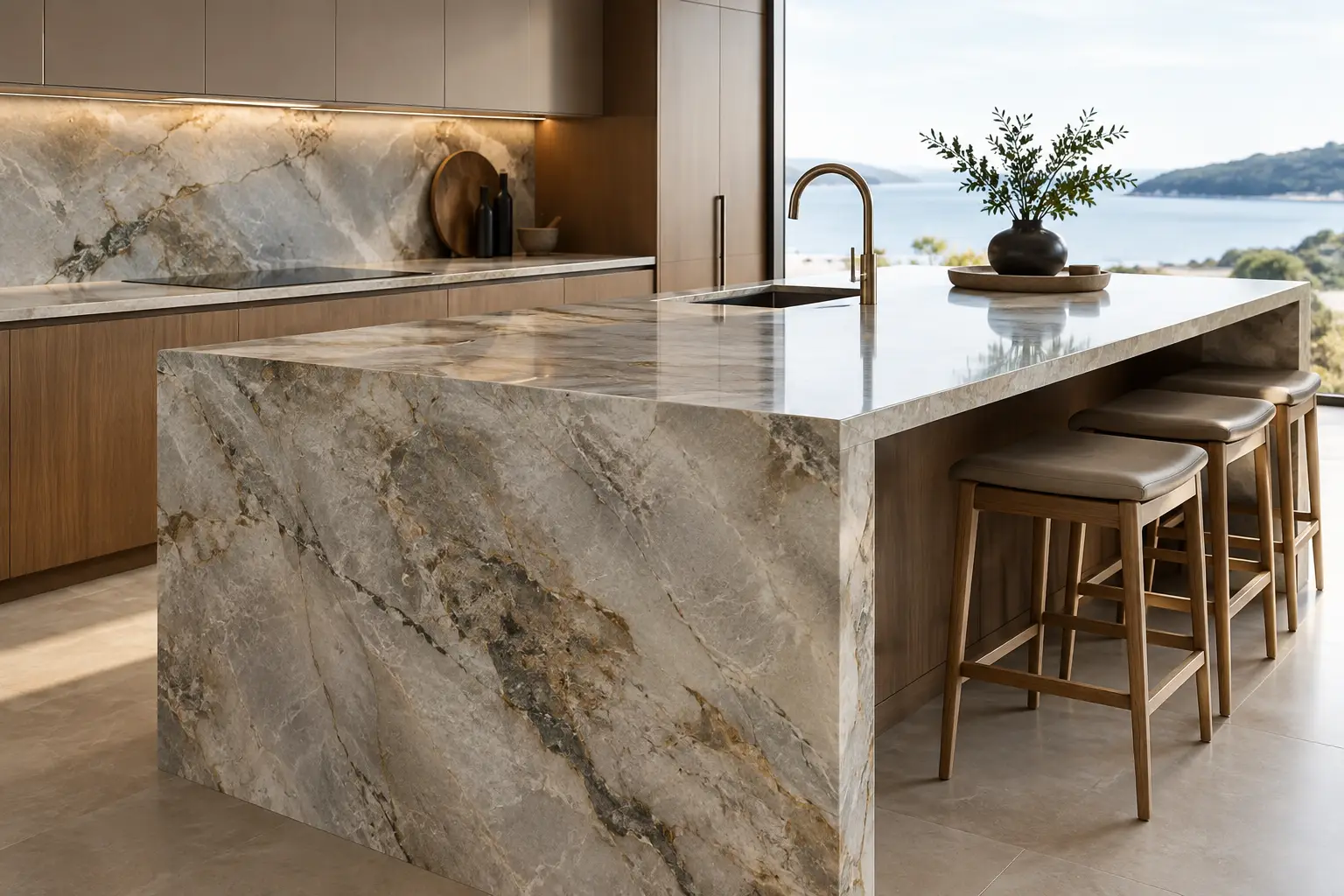
A waterfall edge is not simply a benchtop detail. It is the moment a kitchen island becomes an architectural object. With waterfall island benchtops, the surface continues vertically to the floor at one or both ends, allowing the material’s colour, veining and texture to hold the room together in one uninterrupted gesture.
For a kitchen designed around exceptional material, that continuity has real presence. A hand-selected marble slab can bring fluid movement from the horizontal work surface down the island end. A richly figured quartzite can introduce depth and a sense of permanence. A refined quartz surface can create a composed, contemporary plane where colour and form carry equal weight.
The effect is simple to recognise, yet highly dependent on decisions made well before the finished island is installed. Material selection, slab layout, edge proportions and the relationship between the island and the wider interior all determine whether the result feels considered or merely decorative.
Why waterfall island benchtops have such impact
A conventional island has a clear separation between its benchtop and cabinetry. A waterfall design softens that distinction. Stone becomes the visual anchor, wrapping the island with a sense of mass and continuity while concealing the construction beneath.
This is particularly effective in open-plan homes, where the kitchen is seen from the living and dining areas rather than experienced as a purely functional room. The island often sits at the centre of that view. Giving it a stone end panel creates a focal point that feels intentional from every approach.
There is also a quieter benefit: a waterfall edge can simplify a busy composition. Where cabinetry, appliances, flooring and lighting each contribute their own finishes, a continuous stone form brings visual order. The goal is not necessarily drama. Sometimes the most compelling islands are formed in pale stone with restrained movement, allowing proportion and craftsmanship to do the work.
Select the material before finalising the detail
A waterfall edge makes more of a slab visible. That is precisely why the slab itself deserves to lead the design.
Natural stone is never uniform. Veins shift, mineral deposits appear, and colour can move from one area of the slab to another. These are not imperfections to be designed around; they are the character that makes marble, granite, quartzite and onyx feel alive. But they do require an early, attentive selection process.
Viewing actual slabs allows the designer or homeowner to identify the areas of exceptional movement, quieter fields of colour and any natural features that should be celebrated or positioned with care. On a waterfall island, the slab needs to be considered as a composition rather than as a generic finish.
A bold Calacatta-style marble, for example, may suit a long island where a central vein can travel across the top and descend the end panel. A dark, crystalline granite may be selected for its depth and texture, creating a more monolithic presence. Quartzite offers a broad spectrum, from soft and understated to highly expressive, with the appeal of a natural material suited to a wide range of design directions.
Engineered quartz surfaces can be equally compelling where the brief calls for consistent colour, a specific tone or a more controlled pattern. The right choice depends on the architectural language of the project, how the island will be used and the level of natural variation the client wants to see every day.
Let the slab layout tell the story
The most refined waterfall islands are planned around vein direction and slab yield. A fabricator will advise on practical cutting, joins and construction, but the visual intent should be established early with the selected material in view.
Bookmatching can create a mirrored effect at the transition from benchtop to waterfall end, particularly striking with pronounced veining. Vein matching, where movement continues in the same direction, can appear more natural and fluid. Neither is automatically superior. A quiet material may benefit from a clean, understated arrangement, while dramatic stone can support a more expressive layout.
Joins are also part of the design. They may be subtly placed at the corner, made less visible through considered vein alignment, or treated as an honest expression of how a large stone form is constructed. The right approach is project-specific and should never be decided from a small sample alone.
Get the island proportions right
Waterfall ends can add visual weight. On a generously sized island this can feel sculptural and balanced; on a compact island, two solid stone ends may feel heavier than intended. This is where proportion matters more than trend.
A single waterfall end is often enough to give a smaller kitchen a sense of occasion while leaving the opposite side lighter. It can also be a useful choice where seating, circulation or cabinetry needs a more open edge. Two waterfall ends create a stronger plinth-like form and suit islands designed as a central statement piece.
Consider the thickness profile as well. A standard stone thickness can look beautifully restrained, especially when paired with slim cabinetry and minimal hardware. A built-up or mitred edge introduces greater visual depth and can make an island feel more substantial. It should, however, relate to the rest of the room. An overly deep edge in a finely detailed kitchen can distract from the material rather than elevate it.
The overhang for seating deserves the same attention. Waterfall island benchtops can frame a breakfast bar elegantly, but stool positions, knee clearance and everyday circulation need to be resolved alongside the visual composition. The best islands support conversation and use without asking the room to compromise.
Design for the views beyond the kitchen
An island is rarely viewed in isolation. Its stone should have a relationship with the splashback, surrounding benchtops, flooring, joinery and the rooms beyond.
One approach is to use the waterfall island as the hero material, then choose quieter companion surfaces elsewhere. A distinctive natural stone can be reserved for the island and splashback, while secondary benchtops remain deliberately understated. This allows the material’s movement to be appreciated rather than repeated until it loses impact.
Alternatively, extending the same stone from island to splashback can create a cohesive, gallery-like interior. This works especially well when the slabs have a consistent family of colour and when the kitchen architecture is pared back enough to let the stone take focus.
Lighting changes the experience again. Daylight can reveal the layered depth of quartzite or the subtle translucency within certain marbles. Evening lighting may emphasise polished surfaces, shadows at the waterfall return and the richness of darker stones. Reviewing slabs in person gives a more complete reading of these qualities than a photograph or small sample can provide.
Practical decisions that protect the design
A waterfall edge is exposed to the rhythm of daily life, particularly at corners and near seating. The choice of material should be informed by the household or project use, not appearance alone. A busy family kitchen, a hospitality setting and a low-use entertaining space may each call for different priorities.
Natural stone requires an appreciation of its inherent qualities. Depending on the material, it may develop a gentle patina, show variation more readily or benefit from considered care. For many clients, this is part of its enduring appeal: the surface retains evidence of a real material rather than presenting an identical, manufactured finish.
It is wise to discuss edge profiles, corner treatment and support requirements with the relevant project team early. These details influence both the finished appearance and how the island performs over time. The aim is not to make stone behave like another material, but to specify it with an understanding of what makes it distinctive.
A showroom-led choice for a defining element
Because the waterfall design reveals so much material, selecting from actual slabs is one of the most valuable stages of the process. It gives architects, designers and private clients the opportunity to assess scale, colour, movement and natural variation in full.
At Moonstone, exceptional natural stone and premium quartz surfaces are selected for projects where material is intended to shape the space. For an island that will be seen, touched and lived around every day, this is a decision worth making in person.
The most successful waterfall island does not rely on a dramatic edge alone. It begins with a material that belongs in the architecture, then gives that material enough room to express its character.