A stone surface can set the entire direction of a room. Architectural stone slabs are not simply a finish applied at the end of a project; they can become the material that gives a kitchen, bathroom, lobby or hospitality space its identity. The line of a vein, the depth of a dark quartzite, the translucency of onyx or the quiet texture of honed limestone all influence how a space feels long before furniture and styling are introduced.
For design-led projects, the difference lies in selection. Natural stone is inherently varied, and that variation is precisely where its value sits. A slab should be viewed as a complete piece of architectural material, selected for its movement, scale, colour and relationship to the surrounding design.
What Makes Architectural Stone Slabs Different?
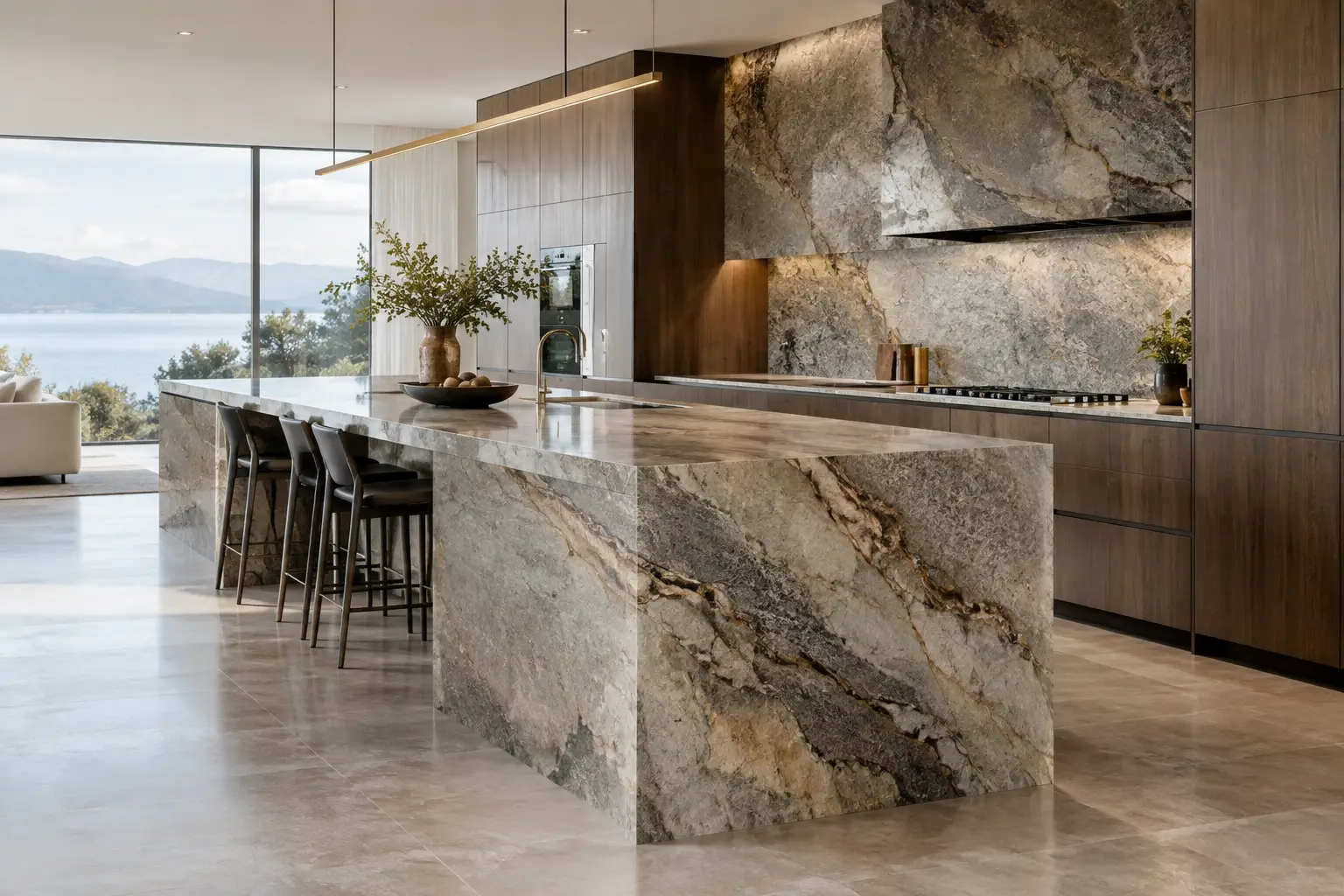
Architectural stone slabs are chosen with the wider space in mind. Their role extends beyond a practical benchtop or vanity surface. They may wrap an island, form a full-height splashback, continue into a fireplace surround, line a reception desk or create a dramatic wall plane. In each case, the stone must work at the scale at which it will be seen.
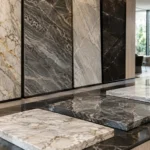
This is why viewing actual slabs matters. A small sample can indicate the base colour and general finish, but it cannot communicate the full character of a natural material. Dramatic marble may have a single decisive vein running through the centre. Quartzite can carry extraordinary crystalline movement that only becomes apparent across a full slab. Even more restrained materials have shifts in tone and texture that influence the finished result.
Rather than treating these characteristics as inconsistencies, considered projects use them deliberately. A bold feature can be positioned across an island face. A quieter portion of the slab may suit a vanity. Two adjoining slabs can be selected for continuity, contrast or a bookmatched composition, depending on the intended effect.
Start With the Role of the Stone
The right stone is rarely chosen by colour alone. The first question is how the material will be used and experienced.
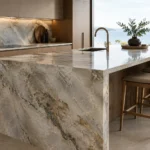
A kitchen island often invites a more expressive selection because it is visible from several angles and sits at the centre of everyday life. A highly figured marble or exotic quartzite can make it feel sculptural, particularly when the stone continues down the ends of the cabinetry. In a compact kitchen, however, a quieter slab with fine movement may bring depth without making the room feel busy.
Bathrooms offer a different opportunity. Stone can create a calm, enveloping atmosphere when used across vanity tops, wall linings and shelving, or a more focused statement when reserved for a single monolithic basin surround. In hospitality settings, stone often needs to make an immediate impression while supporting a durable, considered interior palette. Reception counters, bar fronts, communal tables and bathroom surfaces benefit from materials with visual presence and an enduring quality.
The practical demands of the application should shape the shortlist. Some natural stones are better suited to particular uses than others, depending on their composition, finish, maintenance expectations and exposure to moisture, heat or everyday wear. Engineered quartz surfaces can also be a considered choice where a consistent aesthetic and specific performance requirements are central to the brief. The objective is not to force one material into every setting, but to select the right surface for the project.
Let light influence the selection
Light changes stone more than many people expect. A slab that appears deep and moody in a showroom can become luminous beside a large window. A pale marble may read cool under one lighting temperature and softly warm under another. Honed finishes absorb and diffuse light differently from polished surfaces, which tend to reveal colour, veining and crystalline detail with greater clarity.
Consider the direction of natural light, evening lighting and the materials immediately around the stone. Timber cabinetry, brushed metal, painted joinery and flooring will all alter how its colour is perceived. Where possible, place cabinet samples, paint swatches and hardware against the slab itself. It is a simple step that prevents a design decision from being made in isolation.
Choosing a Stone With Character and Purpose
Marble remains compelling because of its depth, veining and unmistakable natural character. It can be delicate and cloud-like, richly coloured and expressive, or architectural in its graphic contrast. It rewards thoughtful use and a clear understanding that a living material may develop a patina over time.
Quartzite is often selected for its striking movement and mineral depth. Some varieties offer sweeping veining comparable to marble, with a distinctly crystalline appearance. It can suit kitchens, islands and feature applications where visual drama is as important as material presence.
Granite brings another kind of strength to a scheme. Its granular structure, deep tones and varied patterning can feel both timeless and contemporary, particularly in darker, honed or leathered finishes. It is well suited to projects seeking a more grounded, textural expression.
Onyx is chosen for moments of theatre. Its translucency makes it particularly compelling where backlighting can be designed into the architecture, such as a bar face, feature wall or private powder room. It is generally a material for carefully considered applications rather than broad, utilitarian use.
There is no universal hierarchy between these materials. A restrained stone may be exactly right for an interior with elaborate joinery and layered finishes. A rare, highly expressive slab may be the element that gives an otherwise minimal room its emotional weight. The strongest decision comes from understanding what the stone needs to do within the composition.
Design the Slab Layout, Not Just the Surface
Once a slab has been selected, its layout deserves the same attention as the selection itself. This is where a distinctive material can either become exceptional or lose much of its impact.
Think about where the most compelling movement should sit. On an island, it may be placed across the main face so the stone reads as a continuous gesture. For a fireplace or full-height wall, the decision may be whether veining runs vertically to heighten the room or horizontally to create a calmer, layered effect. In bathrooms, vanity tops and splashbacks can align to create a deliberate relationship rather than appearing as separate pieces.
Bookmatching is especially effective with strongly veined marble, onyx and selected quartzites. Two slabs are opened like the pages of a book, allowing the pattern to mirror across a join. It can create a powerful focal point, but it is not automatically the right choice. In some interiors, a continuous flow of veining feels more natural and less formal. The desired effect should be established early, before cutting plans are finalised.
Scale also matters. A fine-veined stone may look refined on a benchtop but disappear across a large wall. Conversely, a large-format pattern that feels dramatic in a showroom can become overwhelming in a smaller room. Looking at the full slab and mapping the intended pieces helps bring proportion into the decision.
Natural Variation Is Part of the Design
Natural stone is formed over vast periods of time, not manufactured to repeat exactly. Changes in colour, veining, fissures, mineral deposits and crystalline structure are normal parts of its character. These features should be assessed honestly before selection, particularly where a project calls for multiple slabs or a close visual match across different areas.
For some clients, this individuality is the reason to choose natural stone. Each surface has its own composition and no two installations are identical. For others, especially where a highly uniform finish is required, a selected quartz surface may be more appropriate. Both choices can be sophisticated. The essential point is to select with clear expectations rather than treating natural variation as an afterthought.
A showroom-led process gives designers and clients the opportunity to see this variation first-hand. Viewing slabs side by side also helps when a project requires continuity across an island, splashback, vanity and feature wall. It enables decisions based on the actual material allocated to the space, not a generic sample image.
A More Considered Selection Process
The most successful projects involve stone early enough for it to influence the design. Waiting until cabinetry, paint colours and hardware are fixed can narrow the possibilities unnecessarily. When stone is selected at the beginning, it can inform the palette, joinery tone, metal finishes and even lighting approach.
Bring drawings, dimensions and material samples to the selection conversation. Discuss where joins may fall, whether edges will appear substantial or fine, and which faces of an island or wall will be visible on arrival. For larger residential, commercial or hospitality projects, confirm the required slab quantities and sequencing early so the selected material can be considered as a complete allocation.
At Moonstone, clients can view hand-selected rare natural stone and premium quartz surfaces in the Auckland showroom, with material selected for individual projects supplied throughout New Zealand. The process is personal because the material is personal.
A remarkable slab does not need to compete with every element around it. Give it the right light, the right scale and enough visual space, and it can hold a room with quiet confidence for years to come.