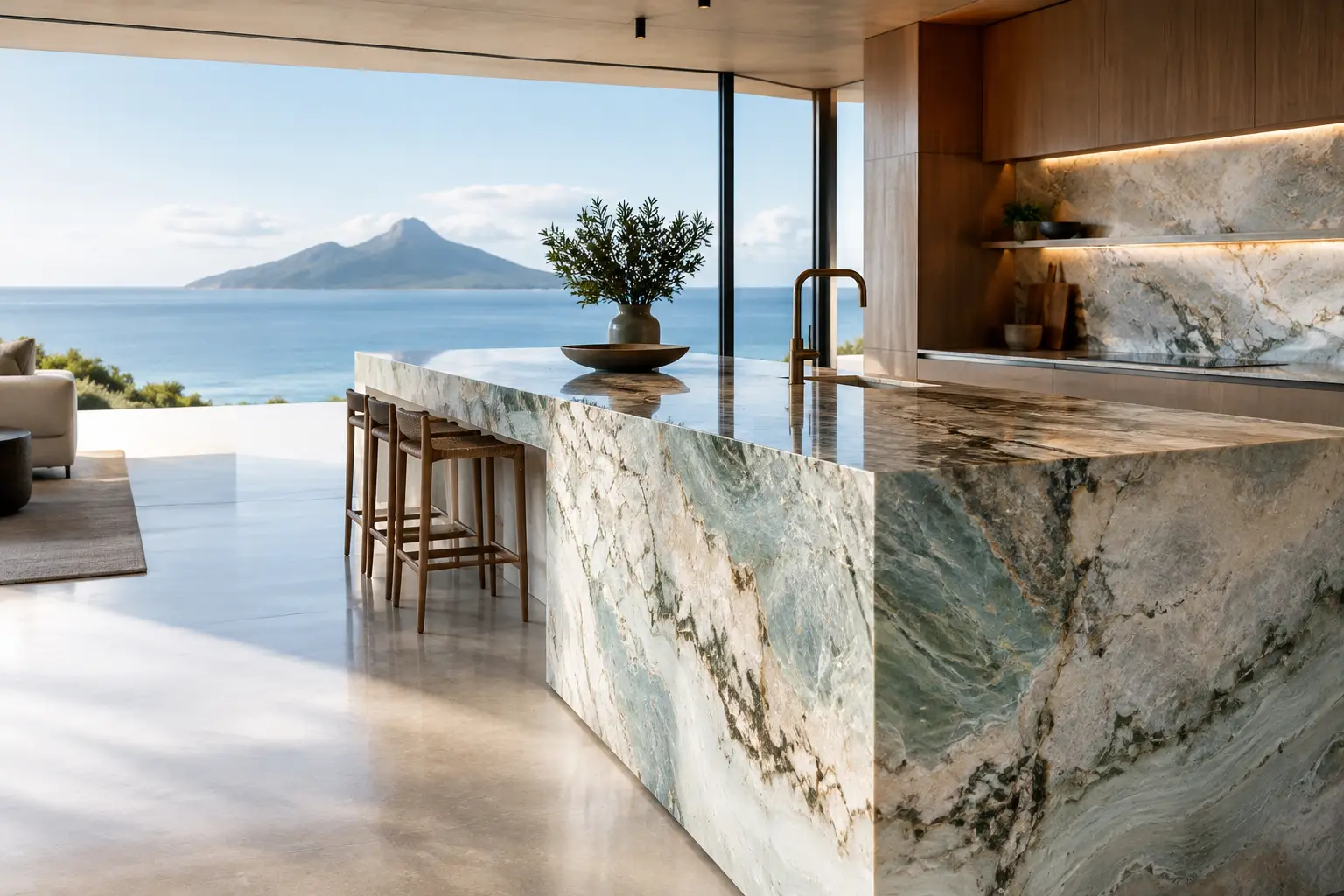
A kitchen island is often the one surface seen from every angle: on arrival, from the living area and in the quiet moments between meals. Rare stone types for islands give that centrepiece a visual language of its own, whether the intention is calm and sculptural or richly expressive. The right slab does more than finish cabinetry. It introduces depth, movement and a sense that the kitchen was designed around a material worth noticing.
For a design-led project, the question is rarely simply which stone is most practical. It is how a particular stone will behave visually within the architecture, how its natural variation will unfold across a large plane, and whether its character will still feel considered after the rest of the room is complete.
Why rare stone types for islands change the room
Natural stone is inherently individual. Veins shift direction, colours gather and fade, and mineral formations create details that cannot be repeated exactly. On an island, where the slab is broad and uninterrupted, this variation becomes part of the composition rather than a background finish.
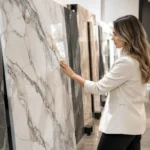
That is why slab selection matters. A small sample can suggest colour, but it cannot reveal the scale of a vein, the stillness between active areas, or the way a honed or polished finish changes the material under daylight. Viewing the actual slab allows the island to be planned around its strongest features, rather than leaving the final result to chance.
Rarity need not mean visual excess. Some of the most memorable islands are formed from softly veined marble, pale quartzite or granite with a restrained but unusual mineral pattern. Others call for dramatic movement that carries across the benchtop and down a waterfall end. The best direction depends on the room, the joinery and the degree of contrast the architecture can hold.
Marble for an island with quiet drama
Marble remains one of the most expressive choices for a statement island. Its appeal lies in the relationship between ground colour and veining: fine grey tracery through white, warm mineral tones through cream, or bolder ribbons that read almost like a hand-drawn gesture.
Calacatta-style marbles suit interiors where the island is intended to feel luminous and sculptural. More layered marbles, with warmer bases or pronounced breccia-like movement, can bring an older, collected quality to contemporary joinery. A bookmatched arrangement may create an exceptional focal point when the material has a vein pattern worth continuing across two adjoining pieces.
Marble asks for an honest approach. It is a natural calcite stone and can develop etching or marks through everyday kitchen use, particularly where acidic foods and drinks are common. For some clients, this evolving surface is part of marble’s enduring appeal. For others, a marble-look quartzite or selected engineered quartz surface may better suit the way the kitchen will be used. Neither choice is inherently superior; the right one is the material that fits both the design intent and the household.
Consider the direction of the vein
A marble slab can feel completely different depending on how it is cut and laid out. Veining that runs lengthways can visually extend the island, while cross-cut movement may create a more expansive, cloud-like effect. This should be considered alongside sink placement, cooktop zones and any waterfall details before the slab is allocated.
Quartzite for movement with mineral depth
Quartzite is often selected when a project calls for the visual drama of natural stone with a more crystalline, architectural presence. It can range from pale and understated to richly layered, with sweeping lines, translucent sections and colours that are difficult to recreate in any manufactured surface.
For islands, exotic quartzites are particularly compelling when the cabinetry is deliberately restrained. A soft green, blue-grey, warm gold or smoky neutral stone can carry the room without requiring decorative excess elsewhere. The effect is especially strong in open-plan homes, where the island needs to relate to timber, metalwork, flooring and living spaces beyond the kitchen.
Not every slab sold under the broad quartzite label has identical characteristics. Natural stone classifications and material behaviour can vary, so each selection should be discussed in relation to the proposed application and finish. A considered supplier will help identify the qualities of the individual slab rather than relying on a category name alone.
Quartzite is also a strong candidate for a continuous island and splashback composition. When the slab offers a distinctive linear movement, continuing it vertically can make the kitchen feel more architectural, while a quieter slab may benefit from being reserved for the island alone.
Onyx for a genuinely singular focal point
Onyx belongs in a different conversation. It is selected primarily for its translucency, colour and remarkable internal patterning. Honey, ivory, green, rust and charcoal formations can appear almost illuminated even before lighting is introduced.
An onyx island is not the conventional choice for a hard-working family kitchen, and it should not be specified as though it were. Its relative delicacy means the design needs to respect the material. Yet in a hospitality setting, a bar, a formal entertaining zone or a carefully considered residential island, it can become the defining element of an entire interior.
Backlighting can heighten onyx’s natural translucency, but it is a design decision that requires coordination. The pattern should be assessed across the full slab, lighting needs to be even, and the overall effect should support the atmosphere of the space rather than compete with it. Used with restraint, onyx has a presence few other materials can match.
Granite with unexpected character
Granite deserves attention well beyond the familiar dark, speckled surfaces many people associate with it. Exceptional granite can present dramatic mineral movement, deep tonal variation and richly textured fields of colour. Some slabs have a near-cosmic quality; others offer a grounded, earthy composition that works beautifully with timber and brushed metal.
For a substantial island, granite can bring weight and visual permanence. It is particularly suited to interiors seeking a more tactile, elemental material palette, including contemporary homes with natural timbers, dark joinery or textured plaster walls. A leathered finish can further emphasise its structure, while a polished finish draws out depth and crystalline detail.
The trade-off is aesthetic as much as practical. A highly active granite requires discipline around it. If the stone is full of movement, let cabinetry profiles, hardware and lighting remain measured. When the surrounding elements are quiet, the island reads as intentional rather than busy.
Selecting the slab, not just the stone name
Stone names are useful starting points, but they are not specifications in themselves. Each block, and therefore each slab, can vary in colour, vein density and background movement. For rare natural stone, the individual slab is the material.
A productive selection process begins with the kitchen drawings, cabinetry samples and an understanding of the island dimensions. Consider where joins may fall, whether a waterfall end is planned, and which face of the slab should be most visible on approach. If two slabs are required, assess them side by side for continuity rather than assuming they will match.
It also helps to define the island’s role early. Is it a serene working surface within a highly detailed room? Is it intended as a dramatic social focal point? Will it sit beneath strong daylight, or be experienced mainly under warm evening lighting? These questions often clarify the right stone faster than a broad search by colour alone.
At Moonstone, viewing hand-selected slabs in person gives designers and private clients the opportunity to make those decisions with the real material in front of them. For projects throughout New Zealand, that direct encounter with scale, finish and natural variation is often where the strongest ideas take shape.
Let the material lead
The most successful stone island is not chosen because it follows a trend or because it imitates another surface. It is selected for the particular room: its light, proportions, joinery and the people who will gather around it. Allow time to view the slab, study its movement and decide how it should be placed. A rare stone rewards that attention with a kitchen that feels not merely finished, but deeply individual.