A benchtop is often the largest uninterrupted surface in a kitchen. It catches the morning light, sets the tone for cabinetry and flooring, and becomes the place where daily life happens. Knowing how to choose stone benchtops means looking beyond a small sample and selecting a material that feels right for the architecture, the way you live, and the character you want the room to hold for years.
For a quiet, pared-back kitchen, that may be a softly veined quartz surface with a refined, consistent finish. For an expressive island designed as the centrepiece of the room, it may be a rare natural stone with dramatic movement, rich colour and a bold edge profile. There is no single correct choice. The most successful benchtops are selected in context.
Start with the role the benchtop will play
Before comparing marble, quartzite, granite or engineered quartz, decide what the benchtop needs to do within the design. Is it intended to recede behind strong joinery and lighting, or become a defining architectural material? Will the kitchen be a hard-working family space, a refined entertaining zone, or both?
An island usually deserves particular attention. It is visible from multiple angles and often has the scale to reveal the movement of a full slab. A stone with pronounced veining or natural variation can make the island feel sculptural, especially when the veining is continued through a waterfall end or paired with a more restrained perimeter benchtop.
In smaller kitchens, a quieter material may create a greater sense of space. That does not mean the surface must be plain. Fine mineral detail, gentle tonal shifts and subtle movement can add depth without competing with other elements in the room.
Choose a material with honest expectations
Every stone surface has its own visual language and practical qualities. The right decision comes from understanding those characteristics rather than expecting every material to perform or age in the same way.
Marble for softness and enduring character
Marble is prized for its depth, translucency and unmistakable veining. It can bring a sense of permanence to kitchens, bathrooms and hospitality spaces, whether selected in a pale, restrained slab or an exotic variety with strong colour and movement.
It is also a natural material that will develop its own story over time. Marble is generally more susceptible to etching and marking from acidic foods and liquids than harder stone options. For some clients, that evolving patina is part of its appeal. For others, particularly in a high-use kitchen, marble may be better placed on an island with considered use, a vanity, feature wall or another lower-contact application.
Quartzite for natural drama and everyday confidence
Quartzite is a natural stone valued for its crystalline structure, striking movement and suitability for demanding benchtop applications. It can offer the visual drama often associated with marble, while providing a different level of hardness and resistance in day-to-day use.
The category is broad. Some quartzites have soft, cloud-like movement, while others have vivid veining, dense mineral detail or exceptional colour. View the actual slab rather than selecting by name alone, as the character can vary markedly between blocks and shipments.
Granite for depth, strength and individuality
Granite remains a compelling choice when the brief calls for a natural surface with depth and presence. Contemporary granites are far removed from the uniform speckled look some people associate with the material. Many feature sweeping mineral patterns, dark tonal grounds, leathered textures or dramatic crystalline detail.
For kitchens with darker joinery, aged metals or timber, granite can create a grounded, architectural contrast. It also suits projects where a naturally resilient material is desired without sacrificing visual distinction.
Engineered quartz for controlled consistency
Selected engineered quartz surfaces offer a more consistent appearance than natural stone, making them particularly useful where a uniform tone or repeatable pattern is important. They can work beautifully in contemporary kitchens, multi-unit developments and commercial interiors where design continuity matters.
This consistency is a strength, not a compromise. The decision depends on whether the project calls for controlled visual calm or the singular movement and natural variation found in an individual stone slab.
How to choose stone benchtops with the whole palette in view
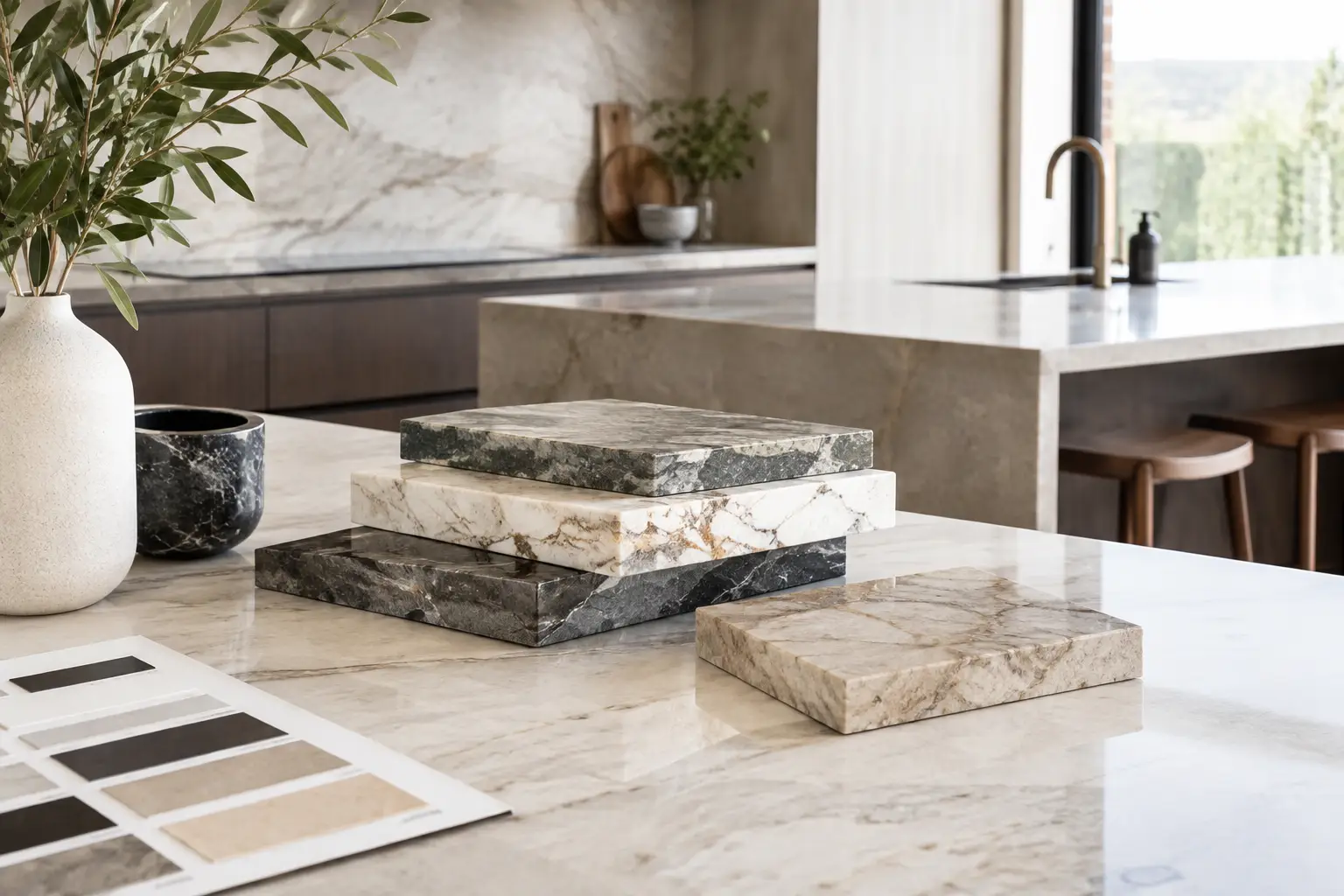
Stone rarely lives alone. Bring cabinet samples, flooring, paint swatches, timber finishes, metal details and tile selections into the conversation. A surface that looks understated on its own can become too cool beside a particular timber, while a richly veined slab may become beautifully balanced when paired with simple cabinetry.
Pay attention to undertones rather than relying only on broad colour descriptions. A white stone may carry warm cream, grey, blue, green or pink notes. Black surfaces can lean charcoal, brown or blue. These subtleties are often what make a scheme feel considered rather than assembled.
Lighting changes the reading of stone, too. A slab viewed in bright showroom light may reveal different depth and veining in a home with lower natural light or warm evening illumination. Discuss where the benchtop will sit, how the room faces and what lighting is planned. This is especially valuable with honed, textured or darker materials, which respond to light in more nuanced ways.
Select the actual slab, not only a sample
Small samples are useful for narrowing a direction, but they cannot show the full scale of natural stone. A sample may capture one vein, one quiet area or one colour note. The slab reveals the composition: where the movement gathers, where the colour shifts and how the pattern could flow across an island or up a splashback.
For a natural stone project, slab selection is part of the design process. Consider which area will be most visible from the kitchen entry, the living space or a dining table. If the slab has a defining feature, it may be positioned deliberately rather than treated as something to minimise.
This also allows a conversation about matching slabs where a project requires more than one. Natural variation between slabs is expected and often desirable, but it should be reviewed carefully when visual continuity is important. Bookmatched feature walls, long islands and connected benchtops benefit from early planning around slab layout.
Moonstone’s showroom-led approach gives clients and design professionals the opportunity to view hand-selected material in person and select slabs for their specific space. For projects across New Zealand, this level of material review can make the difference between a surface that simply fits and one that feels integral to the architecture.
Think through edges, thickness and details early
The stone itself matters most, but detailing determines how it is experienced. A fine, simple edge can make a heavily veined slab feel contemporary. A thicker profile can give a quieter surface more visual weight. Mitred edges, curved ends and waterfall returns can turn a benchtop into a stronger architectural gesture, but each should suit the material and the overall design.
Consider the relationship between the benchtop and splashback at the same time. Continuing the same stone vertically can create a composed, immersive result, particularly behind a cooktop or across a bar area. In other kitchens, a separate splashback material allows the benchtop to remain the focal point.
Practical details deserve equal consideration. Sink configuration, drainage, tap placement, overhangs for seating and appliance clearances should be resolved before final slab allocation. This protects the intended visual composition and helps the project team plan around the available material.
Balance the budget around visual impact
Stone selection is not only about the square metre rate. Slab size, yield, required quantity, edge treatments, cut-outs and the complexity of the design all influence the overall material requirement. A rare natural slab with exceptional movement may be worth reserving for the island, while a complementary surface is used on secondary runs.
This approach can create more impact than applying one material everywhere by default. It also gives the design room to respond to how each surface will be seen and used. A statement island, a stone-lined bar niche or a beautifully detailed vanity can carry a project’s material identity with surprising power.
The best choice is the one that still feels considered after the cabinetry has been installed, the room is lived in and the first changing light moves across the surface. Give yourself time to see the full slab, test it against the palette and choose the material that makes the space feel unmistakably yours.