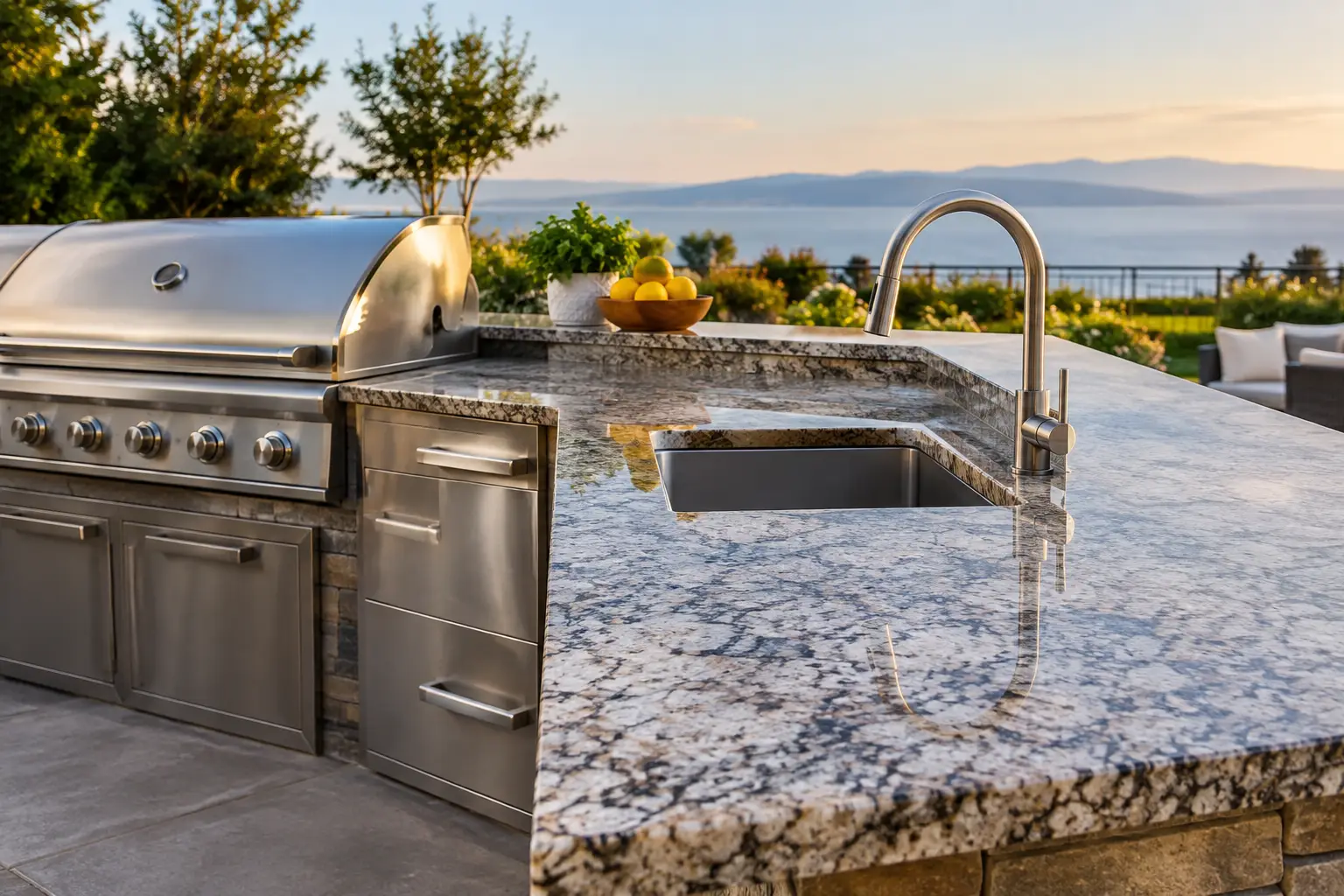
A well-designed outdoor kitchen earns its place in the home when it feels as considered as the kitchen inside. Granite outdoor kitchen benchtops bring the weight, natural character and hard-wearing performance that an exposed entertaining space demands – provided the stone is selected and detailed for the way the area will actually be used.
Granite is not a generic surface. Each slab has its own mineral composition, movement and density, from restrained charcoal fields to dramatic crystalline veining. For an alfresco setting, that individuality matters. A hand-selected slab can anchor cabinetry, complement pool surrounds or exterior cladding, and give the entire space a finish with genuine architectural presence.
Why granite outdoor kitchen benchtops suit New Zealand homes
Outdoor kitchens are exposed to more than a busy weekend barbecue. They contend with strong UV, coastal air, rain carried sideways by the wind, cooking oils, dropped utensils and constant shifts between shade and sun. Granite has long been valued for its natural hardness and its ability to perform in demanding environments. Unlike many indoor-only surface materials, it does not rely on a printed pattern or uniform finish to make an impression.
Its natural variation is also particularly suited to outdoor design. Sunlight reveals the depth of its minerals differently throughout the day, while a dark, richly patterned stone can give an open-plan terrace the visual authority of an interior room. Lighter granites can feel cooler and more relaxed beside timber, pale plaster and landscaped planting.
That said, granite is not maintenance-free, and no natural stone should be sold that way. Its performance depends on the individual slab, the finish, the fabrication quality and regular sealing. A considered specification is what turns a beautiful stone into a long-term outdoor surface.
Start with the site, not the sample
The right granite for a sheltered courtyard may not be the right choice for a fully exposed deck overlooking the coast. Before falling for colour alone, consider how much direct weather reaches the benchtop, whether the kitchen sits beside a saltwater pool, and where cooking, food preparation and serving will happen.
A covered outdoor kitchen gives greater freedom with colour and finish. In a more exposed setting, practical details become more important. Dark stones can become very hot in full summer sun, particularly on a west-facing terrace. A lighter or mid-tone granite may be more comfortable around a barbecue station or bar seating, though even pale stone will warm under direct sunlight.
Coastal properties need particular care. Salt spray does not automatically rule out granite, but it makes proper sealing, cleaning and well-finished edges essential. Avoid allowing salty water, acidic spills or residue from outdoor cleaners to sit on the surface. The fabricator should also account for drainage, joins and fixing methods so water is not trapped where it should not be.
Selecting colour and movement with purpose
A small stone sample cannot show the full personality of a natural slab. Granite can appear almost quiet in a sample, then reveal sweeping movement, sparkling minerals or dramatic shifts in tone across a full benchtop. For a project designed around distinction rather than a standard finish, viewing the actual slab is the only reliable way to make a final decision.
Consider the stone in relation to the surrounding materials. A deeply veined black or green granite can create a compelling contrast against light rendered walls and warm timber cabinetry. Granite with softer greys, creams or warm mineral tones can connect more gently with concrete pavers, limestone and established garden planting.
There is a practical side to colour selection as well. Highly polished black granite can show dust, water spotting and fingerprints more readily than a textured or mid-toned surface. A lively pattern may disguise the marks of everyday entertaining, while a quieter slab creates a more tailored, architectural effect. Neither is inherently better. The decision should suit the maintenance level you are comfortable with and the visual role the benchtop needs to play.
Polished, honed or textured?
Finish changes both the appearance and day-to-day behaviour of granite. A polished finish intensifies colour and reflects light, making the mineral detail feel luxurious and refined. It is an excellent choice for a protected alfresco kitchen where a more formal look is wanted.
A honed finish has a softer sheen and can feel more contemporary beside timber and matte cabinetry. Depending on the particular stone, it may show oils or marks more readily, so ask to see a finish sample and discuss the intended use with your stone supplier and fabricator.
Textured finishes can be visually striking outdoors, especially for vertical cladding or a feature bar front. On a food-preparation surface, however, too much texture can make cleaning less straightforward. The best finish is one that respects both the material and the rituals of the space.
Design the benchtop as part of the outdoor kitchen
Granite deserves more than being treated as a top layer placed over standard cabinetry. Thickness, edge profile, overhangs, splashbacks and waterfall ends all influence how substantial and resolved the finished kitchen feels.
A simple eased edge lets a richly patterned granite remain the focus. A mitred edge can create the appearance of a thicker monolithic slab, particularly effective on an island designed for serving and gathering. For a more sculptural scheme, a waterfall end can carry the stone down to the floor, although it needs careful planning where weather exposure and drainage are involved.
Support is equally important. Stone is strong under compression but it is not indestructible. Long overhangs, cantilevered breakfast bars and cut-outs for sinks, taps or barbecues need appropriate engineering and fabrication. Outdoor cabinetry must be stable, level and made from materials suited to moisture. If the cabinetry moves, the stone will eventually be asked to absorb that movement.
Plan appliances early. Built-in barbecues produce intense heat, and each manufacturer specifies required clearances, ventilation and support. Granite handles heat better than many surface options, but placing a scorching hot pan directly onto any finished stone is still not a habit worth encouraging. Stainless steel inserts, suitable heat barriers and correctly designed appliance surrounds protect both the benchtop and the installation.
Care that preserves the finish
Regular care is uncomplicated, but it should be deliberate. Wipe the benchtop with warm water, a soft cloth and a pH-neutral stone cleaner where needed. Avoid harsh bleach, abrasive powders and strongly acidic products, which can affect sealers and leave residues on the surface.
Sealing helps reduce the chance of oils, wine, sauces and other spills penetrating the stone. The frequency depends on the granite, finish, weather exposure and sealer used. Rather than following a fixed calendar rule, watch how the surface behaves. If water stops beading and begins to darken the stone quickly, it may be time to speak with your stone professional about resealing.
Clean spills promptly, particularly marinades, citrus, vinegar and red wine. Granite is generally more resistant to etching than marble, but a natural stone benchtop remains a premium material, not an invitation to neglect. A little routine care protects its depth and finish for years of entertaining.
Work with the full slab and the right team
The final result relies on more than choosing a beautiful stone. A skilled fabricator will assess the direction of movement, position joins thoughtfully, reinforce vulnerable areas around cut-outs and ensure the slab is transported and installed correctly. These decisions are often invisible once complete, but they define how the benchtop performs over time.
For architects, designers and homeowners, slab selection is the point where an outdoor kitchen moves from an idea to a material statement. Viewing hand-selected granite in person allows you to assess colour in changing light, feel the finish and choose a section of the slab that makes sense for the layout. At Moonstone, that considered process begins with the stone itself.
Bring cabinetry samples, exterior finishes and a rough plan to the selection appointment. The right granite will not merely survive the seasons. It will make the outdoor kitchen feel like a permanent, distinctive part of the home – ready for quiet breakfasts, long lunches and the occasions worth gathering for.